

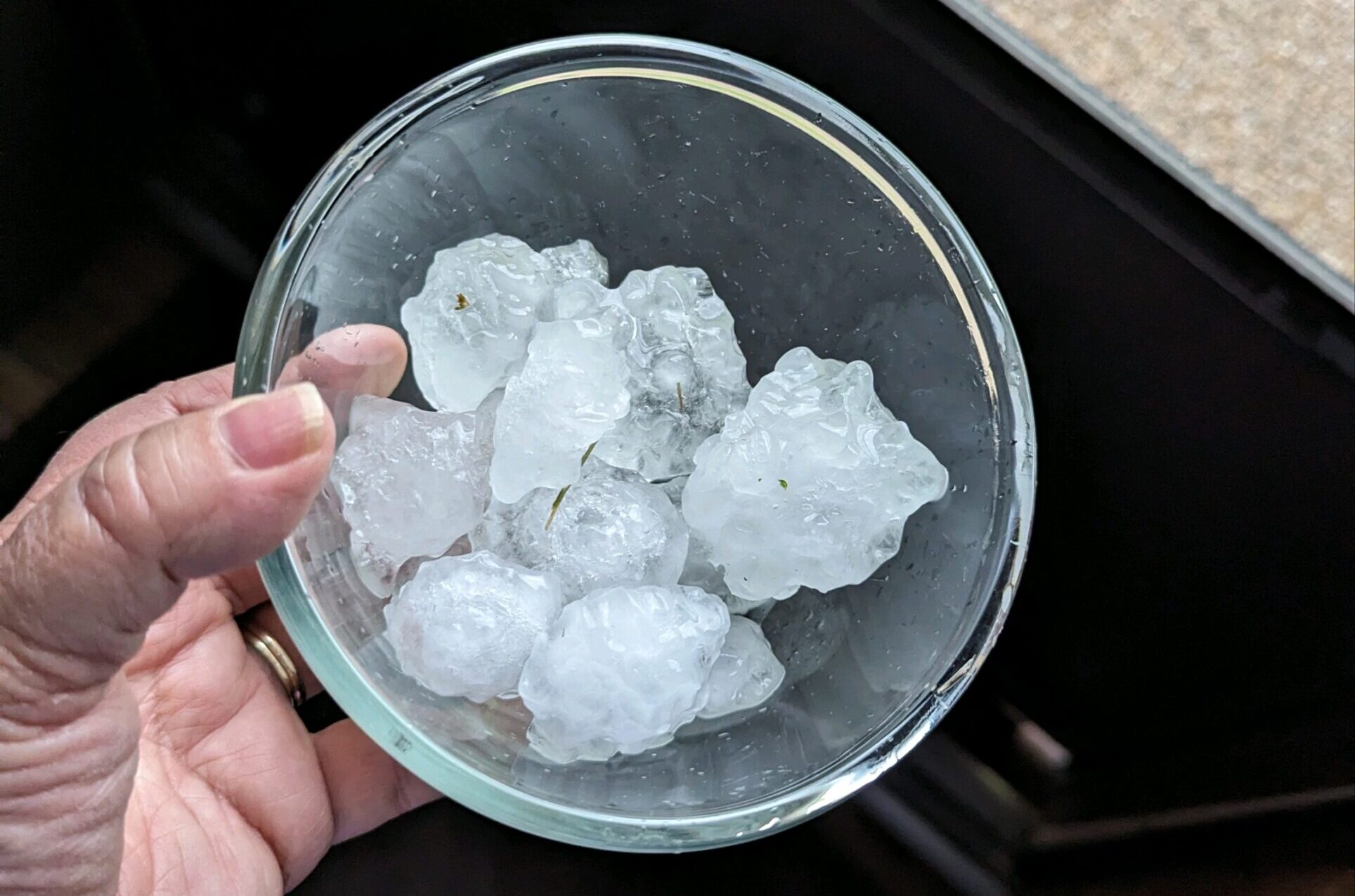
While it is technically ice, and while there was an abundance of it today in Greeneville and Greene County, and yes, it looks like tiny ice cubes – but still it’s probably not a good idea to eat hail. And you should not use it to chill your afternoon drink.
Hail is formed when supercooled water droplets freeze onto condensation nuclei in thunderstorm updrafts, creating solid balls of ice that can vary in size from pea-sized pellets to golf ball-sized chunks or larger.
Though hailstones are made of water, they’re not like ice cubes from your freezer. Hail can form at high altitudes, where it may encounter various pollutants and contaminants in the atmosphere, such as dust, dirt, and pollutants. As hail falls to the ground, it can also pick up additional impurities from the environment. These pollutants can range from harmless dirt to potentially harmful chemicals, depending on the location and conditions.
In a 2009 study, Danish scientists found several species of bacteria and over 3,000 chemical compounds usually found in soil.
Consuming hail could potentially expose you to these contaminants, which could lead to health risks. Even if you managed to find hail that appeared clean, there’s still the risk of bacterial contamination from surfaces it touched during its journey to the ground.